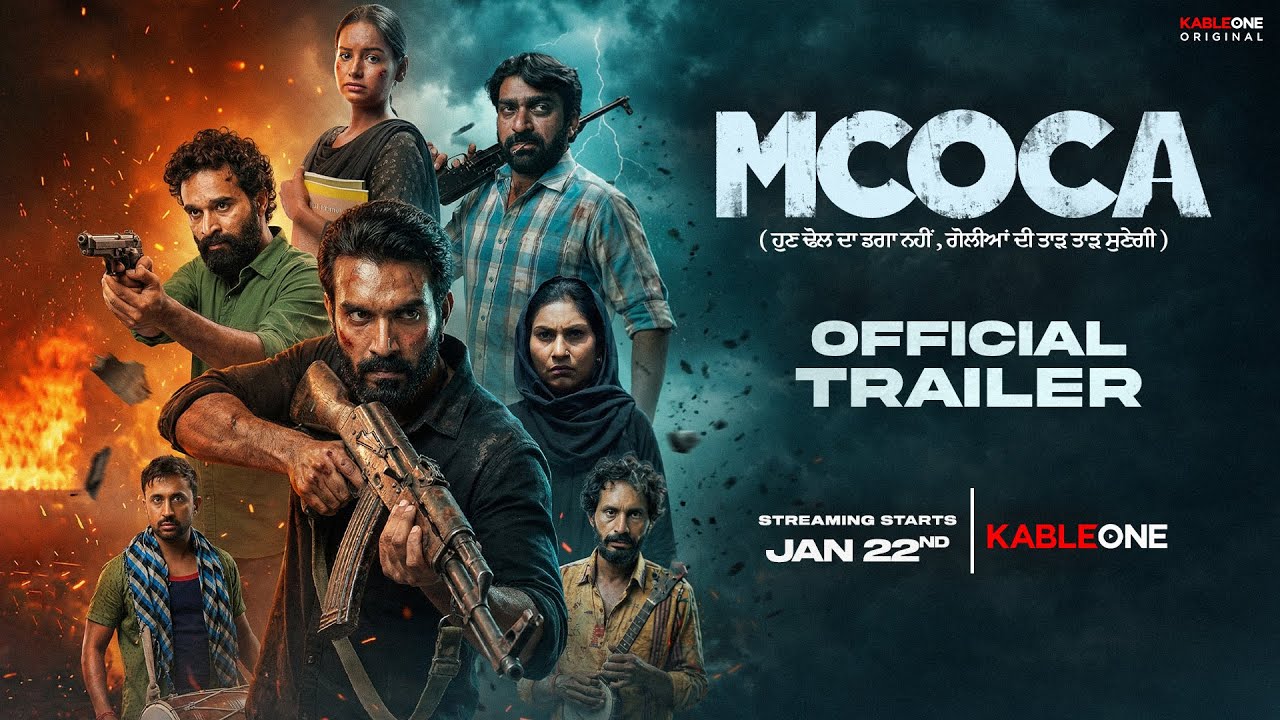
MCOCA Movie 2026 Bollyfllix Review Details
MCOCA: Pollywood’s System-Smashing Roar or Just Another Revenge Drama?

After 18 years in the trenches of Desi pop-culture, you develop a nose for the real deal. Watching MCOCA in a packed Ludhiana single-screen—the whistles, the synchronized rage at the dialogue “MCOCA wale hi asli goonde hain!”—was a flashback to the raw, unfiltered energy that births cult classics.
🎬 Book Movie Tickets Online
Check showtimes, seat availability, and exclusive offers for the latest movies near you.
This isn’t just a film; it’s a mood. Let’s dissect if this mood has the legs to outlive its theatrical run and cement its place in the youth trend film lexicon.
The Culture Hook: More Than Just Whistles
The theatre vibe was less ‘cinema hall’, more ‘collective venting session’. Every time Kammo took a hit for his sister, you could feel the hall wince.
Every time he fought back, they roared. This wasn’t passive viewing; it was participation. Post-release, the migration to reels was instant. Slo-mo shots of KullSidhu walking away from explosions, the aggressive hook of “MCOCA Fire,” and that iconic dialogue are already templates for a thousand ‘angry gym workout’ or ‘system vs.
me’ videos. The film tapped into a very specific, potent vein of Punjabi and pan-Indian youth frustration—the feeling of being screwed by an impersonal, powerful system.
Trend Snapshot: Perfectly Timed Rebellion
MCOCA didn’t just release; it landed. In a climate where audiences, especially from the heartlands, are fatigued by pure escapism and are hungry for narratives that mirror their own confrontations with authority (be it police, bureaucracy, or corrupt power), this film is a grenade.
It positions itself squarely in the rising “Gully Boy meets John Wick” wave of Indian cinema—raw, rooted, hyper-stylized, and unapologetically anti-establishment.

It’s not a metropolitan, intellectual critique; it’s a street-level, fist-in-the-air rebellion. This is its greatest strength for repeat watch value in mass circuits.
| Cast & Core Creator | Impact on Vibe |
|---|---|
| KullSidhu (Kammo) | Star-making raw fury. The anchor. |
| Balwinder Bullet (Sardool) | Unhinged, chaotic energy. Meme gold. |
| Pardeep Cheema (Onkar) | Ice-cold systemic villain. Hiss-worthy. |
| Director Qurban | Rooted, gritty vision. Kept it desi-real. |
| Music (Uncredited) | Bhangra-punk fusion. Reel-ready anthems. |
Youth & Mass Pulse: Does It Connect?
For the Gen-Z in metros consuming it on OTT? It’s a stylish, high-octane entry into Punjabi action. For the single-screen youth in Punjab-Haryana? It’s a manifesto.
The film speaks the language of defiance they understand—not through long speeches, but through shattered bones, revving engines, and loyalty tested in blood.
The brother-sister emotion (however dated the damsel trope) hits the family sentiment chord. The swag, the music, the unabashed display of hyper-masculine power fantasy—it’s all catnip for the mass audience.
It doesn’t *speak to* Gen-Z; it *becomes* the anthem for a subsection of it that feels marginalized and angry.
Dialogue & Meme Potential: Already Viral
The film is a meme factory. Beyond the iconic “MCOCA wale…” line, Sardool’s (Balwinder Bullet) every snarl is a potential reaction GIF for your annoying boss.
Kammo’s silent, smoldering stares are perfect for “Me not reacting to drama” captions. The high-contrast, neon-drenched visuals are inherently shareable aesthetics.
The “Goonda Anthem” track is built for club reels and bhangra challenge videos. The dialoguebaazi, while not Shakespeare, is sharp, repeatable, and designed for the crowd to echo back—the ultimate test of in-the-moment impact.

| Element | Viral Score & Reason |
|---|---|
| Dialogue (“MCOCA wale…”) | 10/10. Perfect grievance encapsulation. |
| KullSidhu’s Action Styling | 9/10. Punjabi John Wick aesthetic. |
| “MCOCA Fire” Track | 9/10. Aggressive, hook-heavy reel fuel. |
| Balwinder Bullet’s Expressions | 8/10. Pure, unadulterated reaction GIF material. |
| Neon-Grit Visual Palette | 8/10. Insta-story aesthetic ready. |
Longevity Check: Will It Age Well?
Here’s the catch. The film’s longevity is bifurcated. As a pure, visceral *experience* and a timestamp of 2026 Punjabi youth angst, it will age like a bold whisky—harsh for some, iconic for its loyalists.
The core emotion of fighting a corrupt system is timeless. However, its treatment, especially the passive female lead and some formulaic revenge plot beats, might feel dated faster as audiences evolve.
Its cult status will be preserved not by narrative complexity, but by iconic moments, music, and the sheer authenticity of its rage. It will be remembered for how it made people *feel* in theatres, not necessarily for a watertight plot.
| Timeline | Cult Longevity Forecast |
|---|---|
| Short-Term (1 Year) | Strong. OTT re-watches, meme lifecycle, anthem status at events. |
| Mid-Term (2-5 Years) | Niche Consolidation. Remembered as KullSidhu’s breakout, a trendsetter for raw Punjabi action. |
| Long-Term (5+ Years) | Period Piece. A definitive example of late 2020s Pollywood’s gritty, system-challenging wave. References will persist. |
The Comparison: Not By Title, But By Type
Forget comparing it to other movies by name. Think of it as a hybrid species. It has the **rooted, socio-political anger of a “Gangs of Wasseypur”** (though far less layered), filtered through the **hyper-stylized, single-hero action template of a “John Wick” or “KGF”**, and delivered with the **unapologetic massy swagger of a classic Punjabi actioner like “Jatt & Juliet” (but without the comedy)**.
It’s a fascinating cocktail that explains its broad, yet specific, appeal.
FAQs: The Trend & Youth Angle
Q: Is MCOCA just a massy film, or does it have something to say to urban youth?
A: It’s both. For the mass audience, it’s cathartic action. For the urban youth, it’s a stylized entry into a subculture of defiance. The themes of systemic corruption and fighting for family resonate universally, even if the packaging is intensely regional.
Q: Why is this film getting so much talk compared to other Punjabi action movies?

A: Timing and topicality. It weaponizes a real, controversial law (MCOCA) as its plot engine, making it feel urgent and relevant. Combined with killer marketing, a breakout star performance, and a killer soundtrack, it transcended the usual genre boundaries.
Q: Can this trend of gritty, system-fighting Punjabi cinema last?
A: Trends cycle, but the *energy* is here to stay. Audiences are rewarding authenticity over gloss. As long as the stories remain rooted and the execution has the raw power of a film like MCOCA, this wave has significant momentum.
The key will be evolving the narratives, especially giving women more to do than just be kidnapped.
Ratings are purely my take after multiple watches — your experience might differ!