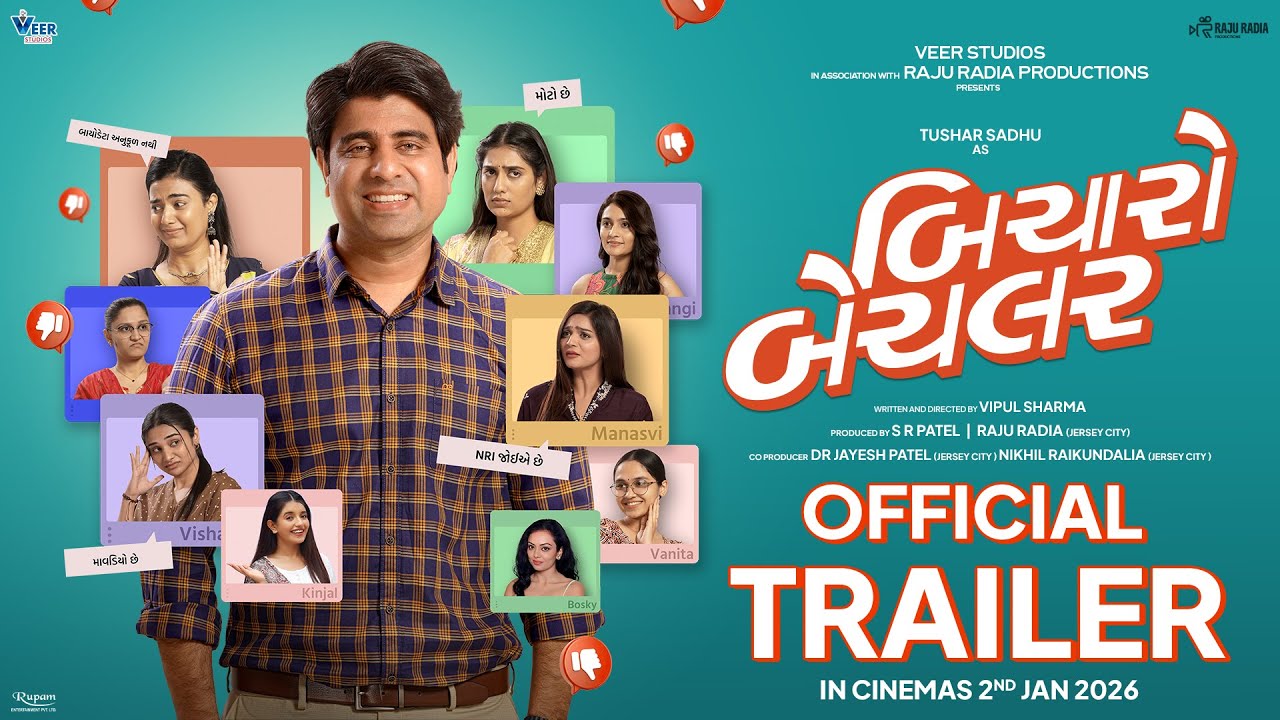
Bicharo Bachelor Movie 2026 Bollyfllix Review Details
Bicharo Bachelor: A Relatable Flop or a Future Gujarati Cult Gem?
Having tracked Gujarati cinema’s evolution from the ‘Chhello Divas’ era to its OTT explosion, I can tell you this: the real cult classics aren’t born in multiplexes; they’re forged in the WhatsApp groups of Ahmedabad and the living rooms of Surat, where repeat value trumps opening weekend numbers.
The “Been There, Dada!” Vibe

The theatre reaction, from what I’ve gauged, isn’t about roaring laughter but collective, painful nodding. You don’t hear loud claps; you hear sighs of recognition from every uncle and aunty who’s ever asked, “Shaadi kab kar rahe ho?” The digital reaction is quieter—less about viral reels, more about niche meme pages sharing clips of Anuj’s exhausted face with captions every Gujarati bachelor feels in their soul.
Trend Snapshot: Perfectly Timed, Imperfectly Made
🎬 Book Movie Tickets Online
Check showtimes, seat availability, and exclusive offers for the latest movies near you.
In 2026, with marriage anxiety at an all-time high and regional content craving authenticity, Bicharo Bachelor had a runway to success. It positioned itself as the quintessential “pressure-cooker family comedy” for the Gujarati middle class.
But in an era where even regional audiences have seen refined global sitcoms, its execution feels a generation behind, making it a fascinating case study of a missed trend.
| Creator / Pillar | Cultural Impact & Role |
|---|---|
| Vipul Sharma (Director/Writer) | Captured the authentic “marriage panic” vibe but fumbled the screenplay polish. The voice is right, the craft is raw. |
| Tushar Sadhu (Lead – Anuj) | His everyman, exasperated performance is the film’s beating heart. He’s the relatable face of a generation under pressure. |
| Rahul Prajapati (Music) | Delivered the film’s most lasting asset: hummable, folk-tinged tracks that feel instantly familiar. |
| Navin Rawal (Dada) | Embodies the classic, overbearing Gujarati grandfather. A trope, but one that resonates deeply. |
| Sahil Patel (Pappu/Casting) | Represents the film’s ensemble strength—bringing fresh, local faces that add genuine flavor. |
Youth & Mass Pulse: Gen-Z Cringes, The Family Relates
For the urban Gen-Z Gujarati, the film’s portrayal of marriage pressure might feel like a cringe-fest from their parents’ playlist. They’ll watch it ironically.
But for the mass, single-screen family audience in Rajkot or Bhavnagar? This is a mirror. It speaks directly to the 25-35 demographic living this reality daily—the app fatigue, the relative-setup awkwardness, the generational guilt.

It’s their life, with a laugh track. The connection is visceral, not cinematic.
Dialogue & Meme Potential: Niche, Not National
This won’t spawn pan-India “Pushpa Raj” level dialogues. Its meme potential is hyper-local and linguistic. Lines from songs like “Lagna lage ghodi mangavjo” or Dada’s grumpy one-liners will find life in specific Gujarati meme pages and family group forwards.
The moments are reel-friendly for a very specific audience—think clips of failed proposals set to the “Slow Motion” track, used to joke about one’s own dating life.
It’s insider humor.
| Element | Viral Score & Reason |
|---|---|
| Song Hooks (“Slow Motion”) | 8/10. Catchy, danceable, perfect for wedding sangeet reels and personal mood videos. |
| Relatable Bachelor Angst | 9/10. The core emotion is gold for meme templates and rant videos. |
| Visual Gags (Dada’s antics) | 6/10. Broad and repetitive, might not travel beyond the film’s context. |
| Dialogue Baazi | 5/10. More situational than punchy. Lacks that sharp, quotable wit. |
| Overall Shareability | 7/10. High within the Gujarati diaspora; almost zero outside it. |
Longevity Check: Will It Age Like Fine Farsi or Stale Fafda?
Here’s the veteran’s take: Films become cult not because they were perfect, but because they were perfectly of their moment. Bicharo Bachelor documents a specific social anxiety in mid-2020s Gujarati society with unvarnished, almost clumsy honesty.
That’s its saving grace. In 10 years, it will be a time capsule—a reference point for “how it felt.” The dated VFX and repetitive gags will be forgiven, much like we forgive the production values of 90s comedies.

Its longevity hinges on its emotional truth, not its technical prowess.
| Timeline | Cult Longevity Forecast |
|---|---|
| Short-Term (1-2 Years) | Remains a “Have you seen that cringey relatable film?” reference among Gujarati youth. Songs survive. |
| Mid-Term (3-5 Years) | Finds its tribe on OTT. Becomes a comfort re-watch for families during festivals, a “so bad it’s good” niche pick. |
| Long-Term (5+ Years) | Earns the “They don’t make ’em like this anymore” tag. Studied for its portrayal of pre-AI era matchmaking pressures in regional cinema. |
The Comparison: It’s Not About Other Movies, It’s About a Vibe
Don’t compare it to Shubh Mangal Saavdhan or Pyaar Ka Punchnama. That’s the wrong league. Think of it as a direct descendant of the early 2000s low-budget Gujarati stage-play-turned-film—raw, loud, and deeply community-focused.
Its true peers are those hyper-local comedies that played in town halls, packed with inside jokes. In the digital age, it’s trying to be that for a streaming generation, bridging the gap between the theatre of the past and the smartphone screen of the present.
FAQs: The Trend Talk
Q: Is this part of the new wave of Gujarati cinema?
A: It’s more of a ripple. The new wave (think Hellaro, Chhello Divas) brought polish and pan-India appeal. This is the old wave learning to swim in new waters—authentic in content, struggling with form.
Q: Will this start a trend of similar “pressure comedies”?
A> Absolutely. The box office might be soft, but the algorithm will notice the engagement.
OTT platforms will greenlight ten more scripts about matrimonial mishaps from every region. This film proves the demand for the topic.

Q: Why should a non-Gujarati watch this?
A> As a cultural anthropologist. To understand the specific texture of middle-class anxiety in Western India. It’s a more honest, less glamorous look at a universal theme than any Bollywood gloss-fest could provide.
Ratings are purely my take after multiple watches — your experience might differ!